


Updated August 2026
Herbs are the cheapest way to change how you cook and the easiest thing in the garden to keep alive. A packet of basil seed costs less than one supermarket clamshell that will be slime in four days, and most herbs would rather you left them alone than fussed over them. You need a sunny spot, a pot that drains, and somewhere to put it. Below we cover which herbs to grow, where to put them, how to keep them producing, and how to carry the tender ones through winter.
Why Start an Herb Garden?
If you're new to gardening and don't know where to start, herbs are the perfect beginner plant. They're forgiving and easy to care for, while offering a variety of uses in your kitchen and around the house. Growing herbs is also a fun way to learn a new hobby and gain practical skills.
Fresh and healthy. Store-bought herbs can't compare to the flavors and aromas of those you grow yourself. You'll know exactly what went into growing them.
Accessibility. Having herbs within easy reach while cooking changes how and what you cook. You'll find yourself reaching for them more often, enhancing any dish or making fresh herbal tea.
Self-sustainability. Growing even a small portion of your own food creates a meaningful connection to what you're eating and reduces your dependence on mass-produced options.
Low maintenance. Most herbs are resilient and require less attention than many vegetables or flowers, which makes them ideal for beginners and experienced growers alike.
Versatility. Beyond cooking, many herbs can be dried for teas, used in homemade remedies, or added to DIY cleaning products.
Know Your Herbs
Getting to know different herbs and what they need is the foundation of a flourishing garden. Think about how you plan to use them and choose varieties that fit.
Rosemary. This evergreen perennial loves full sun and well-drained soil. Rosemary is drought-tolerant and adds a piney, aromatic flavor that's great for roasted meats, breads, and sauces.
Thyme. With tiny, fragrant leaves, thyme thrives in dry, sunny conditions. It's versatile in the kitchen, complementing everything from roasted vegetables to soups and stews.
Sage. Sage's silver-green leaves prefer full sun and well-drained soil. Its earthy flavor is perfect for fall dishes, stuffings, and brown butter sauces.
Basil. Known for its sweet, peppery flavor, basil requires warm temperatures and consistent moisture. It's essential for homemade pesto, Caprese salads, or adding a fresh finish to pastas and pizzas. Basil is also the first herb to die at the first frost, which makes it the one most worth protecting.
Lavender. With its distinctive scent and purple flowers, lavender needs full sun and excellent drainage. It's perfect in teas and homemade body products thanks to its calming aroma.
Mint. Nearly impossible to kill, which is both the appeal and the warning. Mint spreads by runners and will crowd out anything sharing its container, so give it a pot of its own. It tolerates partial shade and rewards hard harvesting.
Parsley and chives. Both want steadier moisture than the Mediterranean herbs and cope with a little less sun. Chives come back year after year and are among the first things up in spring. Parsley is a biennial worth replacing each year, since it turns bitter once it runs to seed.
Chamomile. Loved for its apple-scented flowers that make a soothing tea, chamomile prefers full sun and tolerates some afternoon shade. The white and yellow flowers add beauty to your garden while attracting beneficial insects.

Creating the Right Growing Space
Setting up the right spot makes all the difference. Group herbs that want the same things. Mediterranean herbs, meaning rosemary, thyme, sage, and lavender, share a large container happily because they all want sun and lean, fast-draining soil. Basil, parsley, and chives want steadier moisture and do better together, separately. Mint goes in its own pot or it will take over whatever it is planted with. Whatever container you choose, make sure it drains properly, because herbs dislike soggy roots and can quickly suffer from root rot.
Cold Frames
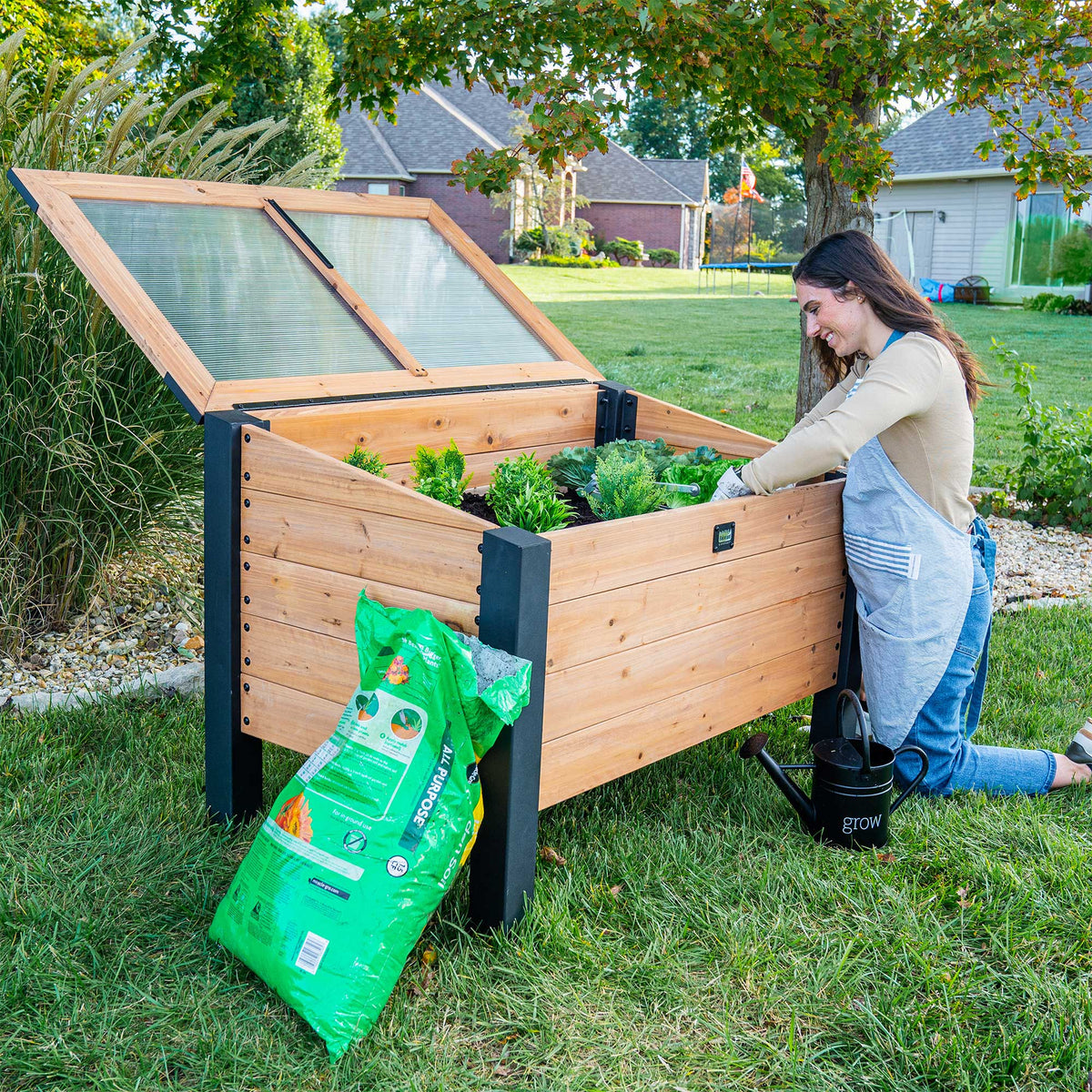
Cold frames are essentially mini-greenhouses that shelter your herbs while letting in plenty of sunlight. They extend your growing season and protect plants from harsh weather, creating a microclimate herbs love. The Aggie Cold Frame Box is a strong choice for herb gardening thanks to features like:
- A lid that lifts itself once the inside passes 70°F and closes again as things cool, with no electricity and nothing to plug in
- Double-wall polycarbonate lid panels that let in natural light while retaining heat
- Natural cedar construction that resists rot and decay
- Powder-coated steel legs and hardware for rust resistance and long-lasting strength
- Wide bottom slats and a heavy-duty mesh liner for excellent drainage
- A compact design that suits homes with limited outdoor space
- Pre-cut, pre-drilled, and pre-stained pieces, that are ready to assemble
- A comprehensive 5-year warranty
Windowsill Planters
Long windowsill planters are ideal for growing herbs indoors, especially in a sunny south-facing window. A planter made from food-safe materials fits easily on a sill and lets you grow several varieties right in your kitchen. Make sure it has drainage holes to prevent soggy roots.
Metal or Cedar Planters
For patios, decks, and balconies, untreated cedar planters are the safest choice for anything you plan to eat, and galvanized steel troughs work well too if you line them. These containers are deep and wide enough for multiple herbs, drain properly, and they can be moved to chase the sun.
Growing Herbs in a Greenhouse
If you want fresh herbs well beyond the growing season, a greenhouse is the step up from a cold frame, and herbs are one of the best uses for the space.
The reason is that herbs are small. They live in pots on staging shelves rather than taking floor space, which means an herb collection can share a greenhouse with tomatoes and peppers without competing for room. It also means you don't need a large greenhouse to grow a lot of herbs. Our compact Willow is 54 square feet with 13 linear feet of built-in staging, which is a great deal of herb capacity in a small footprint. Most of our models also include movable plant hooks, which matter more than they sound, since hanging bunches to dry is easiest indoors where you control the humidity. Our ventilation guide covers managing that humidity through the year.
A greenhouse also solves a problem that trips people up with Mediterranean herbs. Rosemary, thyme, sage, and lavender are more often lost to winter wet than to winter cold, because their roots rot in saturated soil during a cold, rainy season. Keeping them under cover addresses the water before it ever becomes about temperature, which is why these herbs frequently overwinter in a greenhouse in zones where they die outdoors. Our guide to greenhouses in winter covers what to expect overnight in your zone.
Basil is the opposite case and just as compelling. It collapses at the first frost outdoors, and in a greenhouse it will keep producing for weeks longer. For a full picture of what else earns its place under cover, see our guide to what to grow in a greenhouse.

Basic Herb Care
These tips work for most herbs, though it's always worth researching the specific varieties you're growing.
Watering. Most herbs prefer soil that's moist but not soggy. Water when the top inch feels dry to the touch rather than on a fixed schedule, since how fast a pot dries out depends on its size, its material, and the weather. A small terracotta pot of basil in July may need water daily, while an established rosemary in a large container can go a week or more. Make sure containers drain so water doesn't pool around the roots.
Lighting. Herbs love sunlight, and most want at least six hours of direct light a day. Indoors, a south-facing window is ideal, and grow lights can supplement when natural light falls short.
Soil. Well-draining soil rich in organic matter is best. Use a quality potting mix made for containers, or add compost to garden soil for extra nutrients. Avoid heavy clay soils that hold too much moisture.
Pruning. Regular pruning encourages herbs to grow fuller and produce more leaves. Trim the tips once plants are established and before they flower to keep them compact and productive. With basil in particular, pinching out flower buds as they appear keeps the leaves tasting sweet rather than bitter.
Start Herb Gardening Today
Start with two or three plants rather than a full collection. Basil, thyme, and chives between them cover most of what you will actually reach for, and a small pot you harvest constantly teaches you more than a big one you admire. Build from there once you know which ones you use.
If a greenhouse is where you'd like to take it, our lineup runs from the compact Willow and Poppy through the mid-size Bellerose and Zalie up to the Bellerose XL, Savannah, and the metal-framed Larkspur. Every one includes staging shelves and a slat wall, a thermostat-activated exhaust fan, and interior and exterior water hookups as standard.
Browse all Backyard Discovery greenhouses
Herb Gardening: Frequently Asked Questions
What are the easiest herbs to grow for beginners?
Basil, mint, chives, thyme, and parsley are among the most forgiving. Mint is nearly impossible to kill, though it spreads aggressively and is best kept in its own container. Basil grows quickly and rewards frequent harvesting. Thyme and rosemary tolerate neglect and prefer to be under-watered rather than over-watered.
How often should you water herbs?
Check the soil rather than following a schedule, and water when the top inch feels dry. Which herb it is matters as much as the pot. Basil and mint want steady moisture and wilt visibly when they are short, which makes them easy to read. Rosemary, thyme, sage, and lavender would rather run dry between waterings, and far more of them are killed by too much water than too little.
How much sun do herbs need?
Most herbs want at least six hours of direct sunlight a day. Mediterranean herbs like rosemary, thyme, sage, and lavender want as much as they can get. Mint, parsley, and chives tolerate a little less and will grow in partial shade, though more sun still means better flavor.
Can you grow herbs year-round?
Yes, with protection. Indoors, a sunny south-facing window or grow lights will keep hardy herbs producing through winter. Outdoors, a cold frame extends the season by several weeks on each end. A greenhouse goes further still, and it also keeps Mediterranean herbs dry through winter, which is often what determines whether they survive.
Should you let herbs flower?
Generally not, if you're growing them to eat. Once herbs flower, the plant shifts energy from leaf production to seed, and the leaves often turn bitter. Pinch out flower buds as they appear on basil, mint, and oregano. Chamomile and lavender are the exceptions, since the flowers are the harvest.
Do herbs grow well in a greenhouse?
Very well, and they use the space efficiently since they live in pots on shelving rather than on the floor. A greenhouse extends the harvest for tender herbs like basil well past the first frost, and it overwinters Mediterranean herbs like rosemary and sage by keeping their roots out of the winter wet that usually kills them.

Leave a comment
This site is protected by hCaptcha and the hCaptcha Privacy Policy and Terms of Service apply.