


Updated July 2026
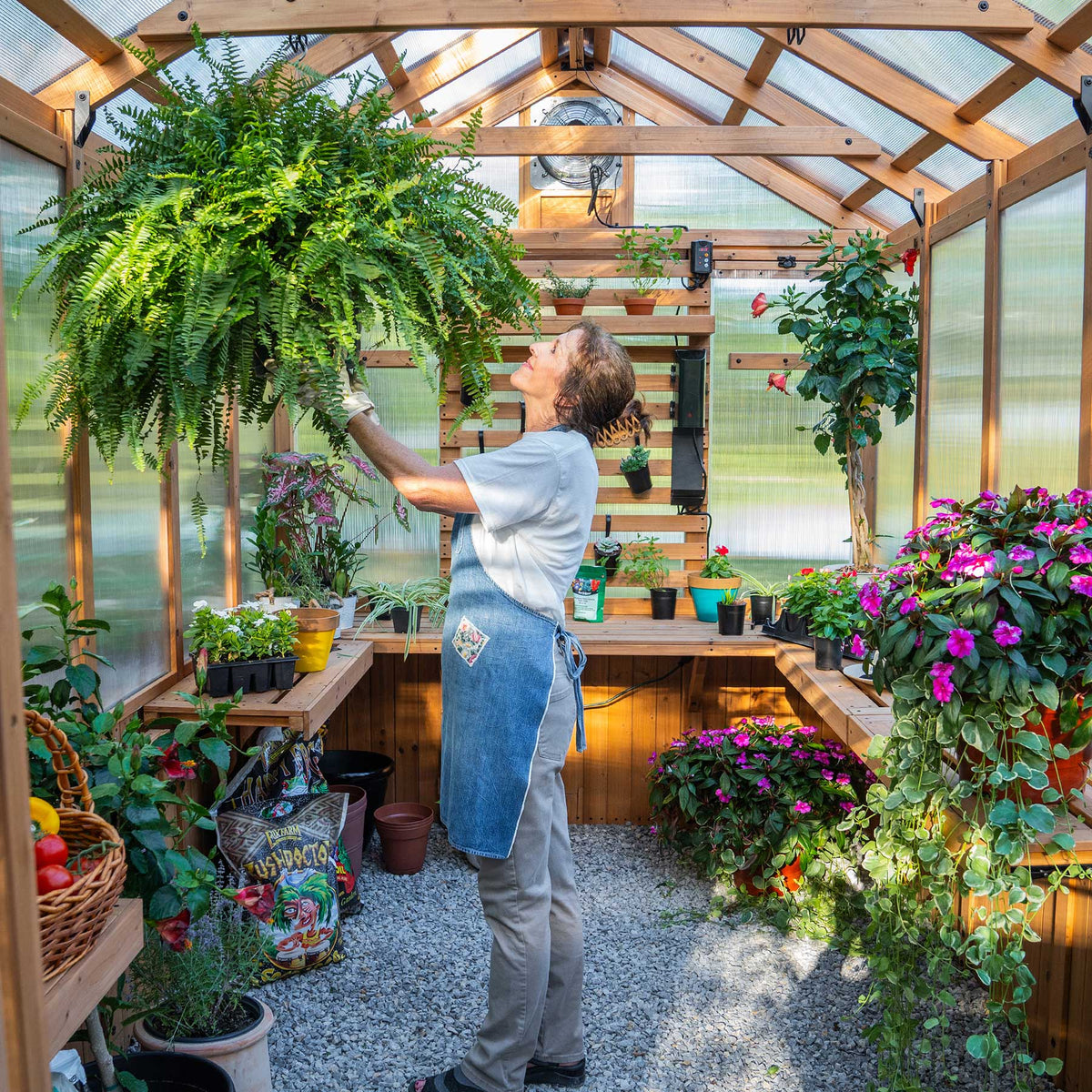
Most greenhouse guides will tell you glass lets in more light, and technically, they are right. But more light does not always mean better growing. The material you choose for your greenhouse panels affects insulation, durability, cost, safety, and how your plants actually perform, not just how bright the interior looks.
Choosing between a polycarbonate greenhouse and a glass greenhouse comes down to six factors: how much light gets through, how well the structure holds heat, how long the panels last, what they cost, how safe they are, and how they perform in your specific climate. Both materials dominate the greenhouse glazing market, and each has genuine strengths. The trick is matching the right one to your growing goals, your region, and your budget.
This guide compares polycarbonate and glass greenhouse panels on every factor that matters, with specific attention to the difference between standard twin-wall and commercial-grade 4-wall polycarbonate, because that distinction changes the comparison significantly.
Is Polycarbonate or Glass Better for a Greenhouse?
For most home greenhouse owners, 4-wall polycarbonate is the better choice. It insulates significantly more than single-pane glass (R~2.1 vs. ~0.9), diffuses light evenly to reduce plant stress, and resists impact from hail and heavy snow. Glass offers superior clarity and a longer raw panel lifespan, making it ideal for display greenhouses or mild climates where insulation is less critical.
Polycarbonate vs. Glass Greenhouse Panels at a Glance
| Twin-Wall Poly (6mm) | 4-Wall Poly (10mm) | Glass (Single Pane) | Glass (Double Pane) | |
|---|---|---|---|---|
| Light Transmission | ~82% | ~76% | ~90% | ~80% |
| Light Quality | Diffused | Highly diffused | Direct (sharp, clear) | Direct |
| R-Value (Insulation) | ~1.6 | ~2.1 | ~0.9 | ~2.0 |
| Impact Resistance | 200x standard glass | 300x standard glass | Fragile (shatters) | Stronger, still breakable |
| Weight | Lightweight | Lightweight | Heavy | Very heavy |
| Lifespan | 10-15 years (UV-coated) | 15-20 years (UV-coated) | 25+ years (40+ with care) | 25+ years (40+ with care) |
| UV Protection | Blocks ~99% UV* | Blocks ~99% UV* | Blocks UV-B; transmits UV-A and infrared | Varies by coating |
| Approx. Cost | Low | Low-Moderate | Moderate | High |
| Best For | Budget kits, 3-season use, mild climates | Year-round growing, cold climates, season extension | Display, mild climates | Cold climates (with budget) |
* UV blocking varies by panel quality and coating. Polycarbonate's UV coating primarily extends panel life rather than protecting plants — standard glass already blocks most UV-B on its own. Leaf scorch in glass greenhouses is caused by concentrated infrared heat, not UV transmission; polycarbonate's diffused light reduces this risk.
Twin-Wall vs. 4-Wall Polycarbonate: Why Wall Count Matters
Not all polycarbonate is created equal. The budget greenhouse kits you find at big-box retailers typically use twin-wall polycarbonate: two layers with one air channel. It is decent for three-season use in mild climates, but the insulation ceiling is limited.
Commercial-grade 4-wall polycarbonate has four layers with three air chambers, which pushes the R-value meaningfully higher (R~2.1 vs. R~1.6 for twin-wall) and improves light diffusion quality. The additional walls also extend panel lifespan by providing more UV-resistant surface area.
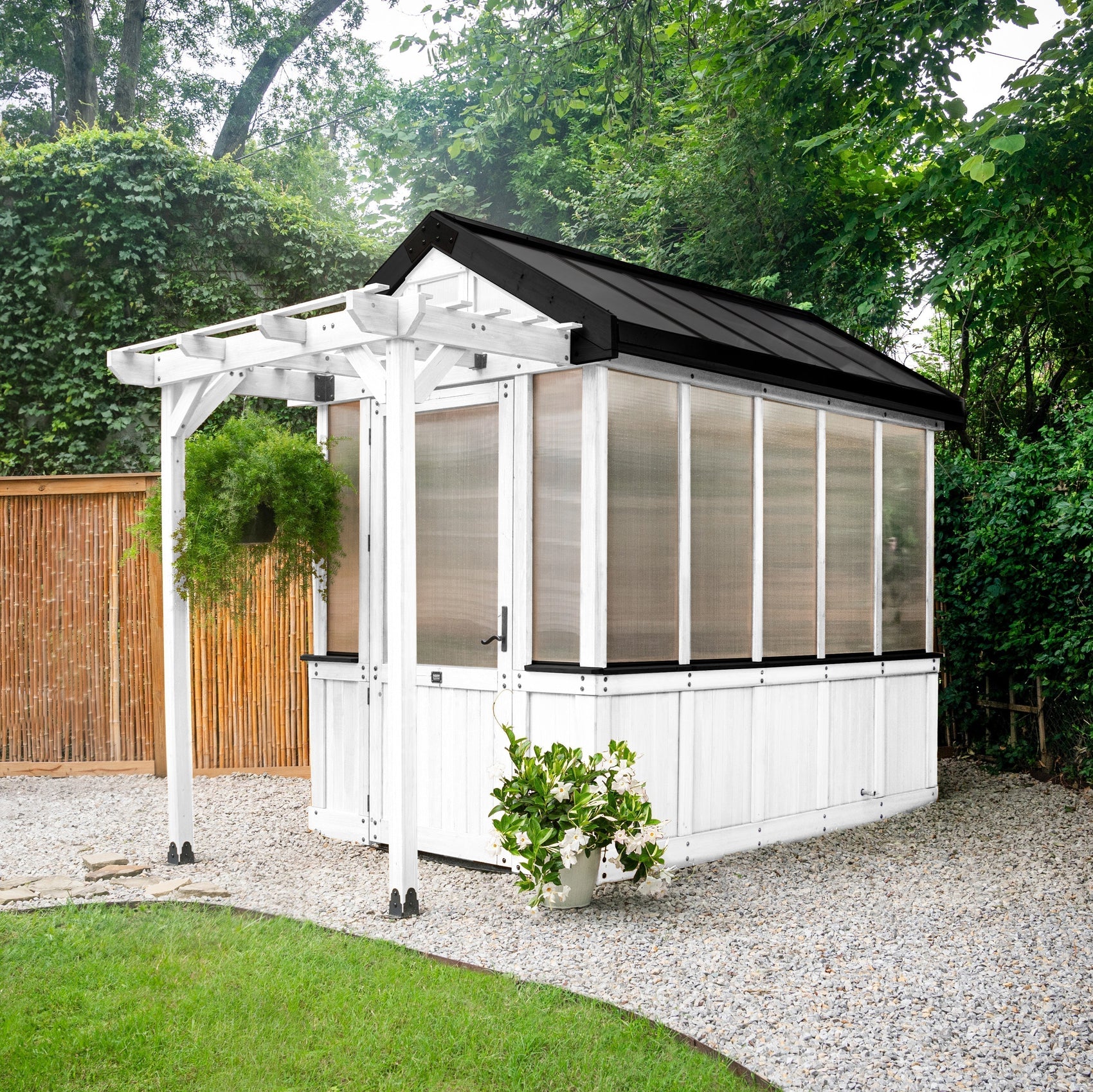
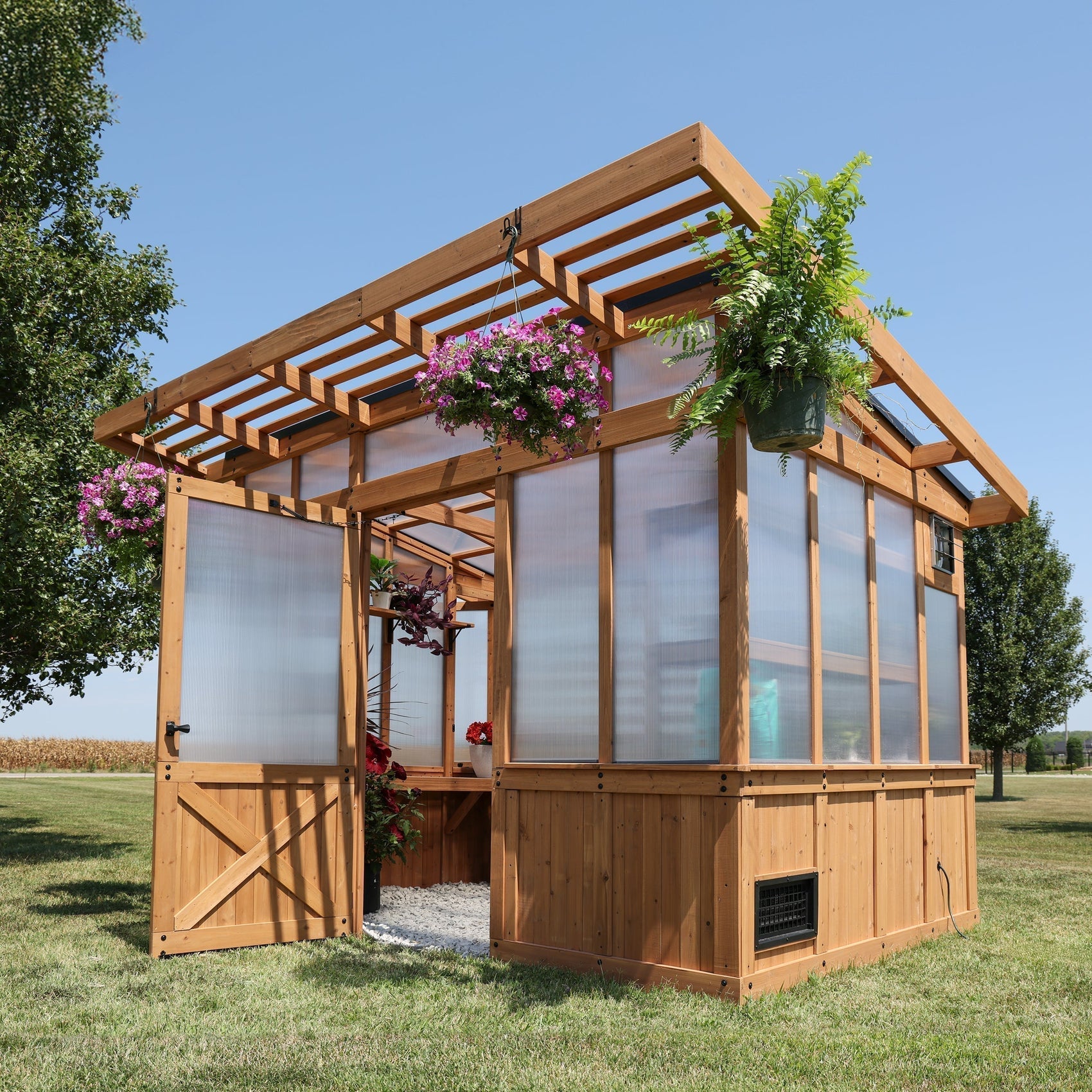
Industry kits typically ship with 6mm twin-wall polycarbonate, and in mild climates, that performs adequately. Backyard Discovery greenhouses use 10mm 4-wall panels as standard across all models, which means better insulation, better diffusion, and longer panel life regardless of your zone. It is a higher spec than most home greenhouse buyers will find at a comparable price point.
How Polycarbonate and Glass Greenhouse Panels Handle Light
Glass transmits more total light (~90%) than polycarbonate (~76-82% depending on wall count), but polycarbonate distributes it more evenly. For most growing purposes, that diffused distribution matters more than raw transmission numbers.
Glass transmits light directly. Sunlight passes through in parallel rays, creating bright spots where beams hit and shadows where they do not. Inside a greenhouse, that creates uneven growing conditions. Plants directly under the sun's path can get scorched while plants on the margins receive less light than they need.
Polycarbonate's internal channel structure refracts light as it passes through, scattering it in multiple directions. The result is diffused light: a softer, more even glow that reaches plants from all angles. Studies in controlled-environment agriculture, including research from Wageningen University, have shown that diffused light improves photosynthetic efficiency and reduces heat stress because the energy is distributed rather than concentrated.
Among polycarbonate types, twin-wall panels transmit ~82% of light. Commercial-grade 4-wall panels like Backyard Discovery's 10mm specification transmit ~76%, which is slightly less light but with meaningfully better insulation. For most vegetable gardening, ~76% transmission is more than adequate, and the insulation gain is the better trade.
One honest trade-off: polycarbonate's light transmission gradually decreases over its lifespan as UV exposure affects the panel surface, even with quality UV coating. Glass maintains its transmission rate essentially unchanged for decades. This degradation is slow and rarely noticeable within the first 10 years on quality panels, but it is a real long-term difference worth acknowledging.
Glass has its own light caveat. Some double-pane glass greenhouses use low-e (low-emissivity) coatings — a thin metallic layer on the glass surface designed to let visible light pass through while reflecting infrared heat back toward its source. In residential windows, that keeps your house cool in summer and warm in winter. But in a greenhouse, you actually want infrared solar energy to enter and warm the interior. The wrong low-e coating can block that solar gain and work against the heat retention that makes a greenhouse useful for season extension. If you are considering double-pane glass with a low-e coating, confirm that the coating is designed for greenhouse applications, not residential windows.
When Glass Clarity Genuinely Matters
Glass is the better choice if you are growing plants that demand intense, direct light: citrus trees, certain orchids, cacti and succulents, or Mediterranean herbs. It is also preferable if visibility matters. Display greenhouses, conservatories, or any structure where you want to see clearly through the walls all benefit from glass clarity. Some gardeners simply love the traditional aesthetic of a glass greenhouse, and that is a perfectly valid reason to choose it.
When Diffused Light Is the Advantage
For most vegetable gardening, seed starting, and general-purpose growing, diffused light from polycarbonate is actually better than the direct light glass provides. Tomatoes, peppers, leafy greens, herbs, and seedlings all benefit from even light distribution. If your backyard greenhouse will primarily support food production or season extension, polycarbonate's diffusion is a feature, not a compromise.
Greenhouse Panel Insulation: R-Values for Polycarbonate vs. Glass
If light is why you build a greenhouse, insulation is what makes it useful beyond summer. The R-value of your greenhouse glazing measures its resistance to heat transfer. The higher the number, the better it holds warmth inside when it is cold outside, and the less you spend on supplemental heating.
In a greenhouse, glazing is the dominant surface area by a wide margin. The walls and roof are almost entirely panels, with the frame making up a relatively small fraction of the total thermal envelope. That means the R-value of your glazing material is doing the vast majority of the insulation work, typically 85 to 90% of the total heat retention equation. Framing material matters at the margins, but the panels themselves are where heat is won or lost.
Twin-wall polycarbonate (the most common in budget greenhouse kits) achieves an R-value of ~1.6. Commercial-grade 4-wall polycarbonate pushes that to R~2.1, comparable to double-pane glass but at a fraction of the cost and without the heavier framing, sealing, and installation demands that glass requires. It also retains roughly 30% more heat than standard 6mm twin-wall panels, based on R-value comparison data. That difference translates directly to extra weeks of shoulder-season growing without supplemental heat.
University extension research from UMass confirms that glazing choice has a direct and measurable impact on greenhouse heating costs. Based on R-value differences, a single-pane glass greenhouse (R ~0.9) loses heat roughly 2.3x faster than a 4-wall polycarbonate structure (R~2.1), which translates directly to higher energy bills over a decade of use.
The air channels between walls act like the dead air space in a double-pane window. The more walls, the more air channels, the higher the R-value. This structural insulation advantage is why polycarbonate dominates the residential greenhouse market.
One trade-off worth noting: better insulation means a greater risk of overheating in warm weather. Any well-insulated greenhouse needs adequate ventilation, whether that means ridge vents, side vents, or exhaust fans, to prevent temperature spikes during sunny days. The insulation advantage of polycarbonate is real, but it works best when paired with a ventilation plan.
Condensation is another practical consideration. Single-pane glass greenhouses are prone to interior condensation, which can drip onto foliage and promote fungal growth. Polycarbonate channel ends should be fitted with vented end caps or breathable tape that blocks insects and debris while allowing internal moisture to escape. Fully sealing the channels airtight can trap condensation inside the walls. Check your kit's installation guide for the recommended method.
This is where panel quality separates budget kits from serious growing structures. Backyard Discovery greenhouses use commercial-grade 4-wall polycarbonate panels rated at the top of that R-value range. Combined with durable framing, the result is a structure that holds warmth well enough to extend your growing season on both ends without expensive supplemental heating in many climates.

What This Means for Your Heating Bill
If you are in USDA Zones 3 to 6 and plan to grow through fall and winter, the insulation value of your glazing is the single most important spec to evaluate. A greenhouse with 4-wall polycarbonate panels can extend your growing season by several weeks on each end compared to single-pane glass, without adding a cent to your energy bill. With supplemental heat, the savings compound. Over a 10-year span, the energy savings from better-insulated panels can exceed the cost difference between glazing options.
How Long Do Polycarbonate Greenhouses Last vs. Glass?
Glass lasts longer in raw lifespan, typically 25+ years and often 40 or more with proper maintenance, but polycarbonate is far more durable against impact, weather, and daily use. For most home greenhouse owners, polycarbonate's 10 to 20 year panel life with virtually zero breakage risk delivers better lifetime value.
Glass does not degrade from UV exposure, does not yellow, and retains its optical clarity essentially forever. If longevity is your primary criterion and you are building a structure you want to hand down, glass makes a strong case.
But lifespan is not the same as durability.
4-wall polycarbonate is rated at approximately 300 times the impact resistance of standard annealed glass. It is also significantly stronger than tempered safety glass. Tempered glass resists impact better than standard glass, but it still shatters into fragments under sufficient force. Polycarbonate will flex, crack, or dent but does not produce dangerous shards. It will not shatter from a hailstorm, a stray baseball, a fallen branch, or an accidental bump with a wheelbarrow.
The most common concern with polycarbonate is yellowing. Over time, UV exposure breaks down the panel surface, causing a gradual yellow tint that reduces light transmission. Quality UV coating delays this significantly, which is why the UV coating spec matters more than the panel thickness when evaluating longevity. Polycarbonate without adequate UV protection can begin to yellow within a few years of outdoor exposure, a well-established degradation pathway that depends on panel quality, UV index in your region, and orientation. Budget panels with thin or no UV coating will show degradation sooner. Panels with quality UV protection hold their clarity for the full rated lifespan.
Glass, by contrast, breaks. And when it breaks, it is expensive to replace. A single broken pane from a hailstone can cost $50 to $200 or more depending on size and type, and it needs to be replaced immediately, or you lose your climate envelope. Tempered safety glass reduces the danger of breakage but does not eliminate it, and it costs significantly more than standard glass. Some building codes may require tempered glass for roof panels specifically, so check your local requirements before choosing your glazing.
Warranty coverage is another practical difference. Glass greenhouse warranties typically cover manufacturing defects but exclude breakage from weather, impact, or handling, which are the most common causes of glass failure. Polycarbonate warranties cover UV degradation and weathering, which means the most likely failure mode is the one that is actually protected. Backyard Discovery's polycarbonate panels are backed by a comprehensive 5-year warranty. When comparing kits, check what the warranty actually covers, not just how long it lasts.
For regions with severe weather, structural testing matters as much as the panel material itself. Backyard Discovery's greenhouses are tested under the Pro-Tect™ program for both snow load and wind resistance, with every model rated to 100 mph winds and 50 lbs/ft² snow load. That kind of tested, published structural data is uncommon in the residential greenhouse market.
Maintenance: Polycarbonate vs. Glass Greenhouses
Glass requires regular cleaning to maintain its visual clarity and is prone to watermarks and streaks, especially in areas with hard water. It does not degrade, but it does get dirty, and a grimy glass greenhouse loses its primary aesthetic advantage quickly.
Polycarbonate needs only an annual wash with mild soap and water. Never use abrasive cleaners or solvents, which can damage the UV coating. After 10 or more years, inspect panels for signs of UV degradation such as cloudiness or brittleness at the edges and plan for replacement if needed. Properly maintained polycarbonate panels will perform to the end of their rated life with minimal effort.
The Realistic Calculation
A polycarbonate greenhouse that lasts 15 years with zero panel replacements may cost you less over its lifetime than a glass greenhouse that lasts 40 years but requires two or three pane replacements along the way. Factor in the higher heating costs of glass, especially single-pane, and the total cost of ownership often favors polycarbonate, particularly in climates with severe weather.
Cost Comparison: Polycarbonate vs. Glass Greenhouse Panels
Polycarbonate costs roughly half the per-square-foot price of equivalent glass, and the savings compound when you factor in heating and installation.
If you are buying a greenhouse kit, which most home buyers do rather than sourcing panels and framing separately, those with polycarbonate are typically priced well below comparable glass-panel greenhouses. For DIY builders sourcing panels separately, the raw material difference is also significant. As of early 2026, twin-wall polycarbonate sheeting runs around $1.50 to $3.00 per square foot, while single-pane greenhouse glass runs $2.50 to $3.50 per square foot and double-pane glass starts at $3.50 and climbs significantly with low-e coatings or tempered options. Prices are approximate US retail costs as of early 2026 and vary by supplier, region, and panel specification.
One pricing note: 4-wall polycarbonate panels cost more than twin-wall, but you are paying for meaningfully better insulation. If you are comparing a 4-wall polycarbonate kit against a twin-wall kit at a lower price, factor in the heating cost difference over even a few seasons. The 4-wall panels often pay for themselves.
But the real cost comparison goes beyond the panels themselves.
Heating costs: A single-pane glass greenhouse of the same size can lose heat through its glazing at roughly 2.3 times the rate of a 4-wall polycarbonate structure. For example, a 10x12 greenhouse maintaining 40°F on a 10°F night, single-pane glass requires approximately 13,200 BTU/hr to offset heat loss through the panels, compared to roughly 5,700 BTU/hr for 4-wall polycarbonate. Your total heating demand will be higher than these numbers since heat also escapes through the frame, doors, and air gaps, but the gap between the two materials stays the same.
Replacement costs: Broken glass panes are expensive and urgent. Polycarbonate panels rarely need replacement within their rated lifespan.
Installation: Glass is heavy, fragile during handling, and often requires professional installation. Polycarbonate is DIY-friendly. You can cut it with standard tools and mount it without specialized equipment.
Insurance: Before you build, check with your homeowner's insurance provider as greenhouses may require a rider, and your glazing material could affect coverage terms. Polycarbonate's shatter resistance may work in your favor.
For most home greenhouse buyers in the $1,500 to $6,000 range, polycarbonate delivers substantially more value per dollar than glass at the same price point.
Most Backyard Discovery's greenhouses fall in the mid-to-upper end of that range, with 4-wall polycarbonate and built-in features such as electrical outlets, staging shelves, and a slat wall system included rather than sold separately. That distinction is worth noting when comparing prices across brands.

Best Material for a Backyard Greenhouse You Are Building Yourself
If you have children, pets, or live in an area with severe weather, polycarbonate is the safer glazing material. It is virtually shatterproof, produces no dangerous fragments if it fails, and is dramatically easier to work with during assembly.
This factor matters more than most guides acknowledge. Polycarbonate does not produce sharp shards when it fails. It may crack under extreme force, but it will not explode into dangerous fragments the way glass can.
On the DIY side, polycarbonate panels are vastly easier to work with. They are light enough for one person to carry, can be cut with a circular saw or even a utility knife, and flex slightly to accommodate imperfect framing. Glass requires precise measurements, careful handling, and ideally a helper. One slip during installation means a broken pane and a trip to the glass supplier.
If you are assembling a backyard greenhouse kit yourself, which many home greenhouse buyers do, polycarbonate reduces the risk of installation damage and makes the project significantly more approachable. Backyard Discovery designs its greenhouse kits specifically for DIY assembly: pre-cut 4-wall polycarbonate panels fit into pre-drilled frames, and the BILT® app provides 3D interactive instructions that walk you through every step. Built-in features like staging shelves, a workstation, PowerPort™ electrical outlets, and interior hose hookups come standard, so you are not sourcing accessories separately after the build.
Best Greenhouse Glazing by Climate Zone
Your USDA hardiness zone should heavily influence your glazing decision. Here is how polycarbonate and glass greenhouse panels perform across different climate conditions.
Cold Climates (Zones 3 to 5): Polycarbonate Wins
In regions with harsh winters, heavy snow, and sub-zero temperatures, greenhouse insulation is everything. 4-wall polycarbonate provides meaningfully better heat retention than any single-pane glass option, and it outperforms twin-wall polycarbonate as well. The impact resistance also matters here: hail, ice storms, and heavy snow loads can crack glass but will not faze polycarbonate.
With a 4-wall polycarbonate greenhouse and minimal supplemental heat, expect to grow cold-hardy greens such as spinach, kale, lettuce, and arugula along with root vegetables through late fall and early spring. With active heating, tomatoes and peppers can push into November.
If you are building a backyard greenhouse in Vermont, Minnesota, or Colorado, polycarbonate is the practical choice. Look for kits with documented roof load ratings. The Backyard Discovery Larkspur, for example, is rated to 10,600 lbs of total roof load, with the rest of the lineup ranging from 2,600 to 9,950 lbs depending on size. That kind of structural testing matters when January snow builds up.
Temperate Climates (Zones 6 to 8): Both Work, Polycarbonate Edges Ahead
In the mid-Atlantic, Pacific Northwest, or upper South, either material can work. Glass greenhouses are viable here because winters are milder, but polycarbonate still offers better insulation value per dollar. Diffused light from polycarbonate is particularly useful in these zones during hot summers, reducing the risk of overheating. If you are choosing between a twin-wall polycarbonate kit and a single-pane glass kit at the same price, the polycarbonate will outperform in every measurable way except aesthetic transparency.
Hot Climates (Zones 9 to 11): Depends on Your Priority
In the Deep South, desert Southwest, Southern California, or genuinely tropical zones like South Florida and Hawaii, the insulation advantage flips. You are not trying to retain heat in these zones. You are trying to shed it. A higher R-value actually works against you by trapping warm air inside, which means insulation is no longer polycarbonate's selling point here. On that metric alone, glass's lower R-value would actually help by letting heat escape faster.
But insulation is only part of the equation. What matters more in hot climates is light management. Glass transmits direct, concentrated sunlight that intensifies interior heat spikes, which is exactly the problem you are already fighting. Polycarbonate's diffused light distribution reduces those temperature peaks, keeping the growing environment more stable without relying entirely on ventilation and shade cloth. That light diffusion, not insulation, is why polycarbonate still edges ahead in hot climates for most growers.
That said, if you are building a display greenhouse or conservatory in a mild coastal climate, glass's clarity and aesthetics may take priority since you will not need to worry much about heat retention. Ventilation becomes the more important variable regardless of your glazing choice.

Choosing Your Greenhouse Glazing: The Final Word
After comparing the data across all six factors, the decision usually comes down to one question: what matters most to you?
Choose glass if you prioritize traditional aesthetics and maximum visual clarity. Glass is the right material for conservatories, display greenhouses, and mild climates where insulation is less critical. It pairs best with a budget that accommodates double-pane glass and professional installation. If you are building a structure you want to last 40 years with minimal panel maintenance, glass delivers on that promise.
Choose polycarbonate if you want the best insulation per dollar, especially 4-wall for year-round growing. Polycarbonate is the practical choice in climates with cold winters, hail, or heavy snow. It is the better material if you are assembling the greenhouse yourself, growing food rather than displaying ornamental plants, or prioritizing safety around children and pets.
That is not a knock on glass. It is a recognition that polycarbonate's combination of insulation, durability, safety, and affordability simply serves more people in more situations.
Whatever you choose, the most important thing is matching your greenhouse glazing to your goals. A glass greenhouse in Zone 4 is not wrong; it is just expensive to heat. A polycarbonate greenhouse in a mild coastal zone is not wrong; it just will not have the same visual charm as glass. Understand the trade-offs, prioritize the factors that matter for your situation, and build with confidence.
Polycarbonate is the right answer for most home greenhouse buyers, but the version of polycarbonate matters as much as the material itself. Backyard Discovery uses 10mm 4-wall panels rated at R-2.1 across every model, paired with FSC-certified cedar or galvanized steel and aluminum framing, structural ratings tested to 100 mph winds and 50 lbs/ft² snow loads under the Pro-Tect™ program, and a 5-year warranty that covers the whole greenhouse rather than just the frame.
Browse the Backyard Discovery greenhouse collections to find the right fit for your space, climate, and growing goals.
Polycarbonate vs. Glass Greenhouses: Frequently Asked Questions
Does polycarbonate block UV in a greenhouse?
Most greenhouse-grade polycarbonate panels block ~99% of harmful UV radiation while still transmitting the visible light plants need for photosynthesis. However, the UV-blocking coating's primary job is protecting the polycarbonate panel itself from degradation, not protecting your plants from sunburn. Standard glass also blocks most UV-B and a significant portion of UV-A on its own. The real difference for plants is not UV exposure but heat distribution: glass concentrates infrared energy into hot spots that can scorch foliage, while polycarbonate diffuses both light and heat more evenly. That diffusion, rather than UV filtering, is the mechanism that reduces leaf burn in polycarbonate greenhouses. Note that UV blocking performance varies by panel quality and coating, so check the manufacturer's specifications.
How thick should polycarbonate be for a greenhouse?
Most budget greenhouse kits include 6mm twin-wall polycarbonate, which is adequate for mild climates and three-season use. For serious season extension, particularly in Zones 3 to 6 where fall and spring temperatures drop below freezing overnight, 10mm 4-wall polycarbonate provides meaningfully better heat retention (R~2.1 vs. R~1.6 for twin-wall) and is the specification used in Backyard Discovery's full greenhouse lineup. Thicker 4-wall panels transmit slightly less light but make up for it with better energy performance and diffusion quality. If year-round growing or cold-climate performance matters, 4-wall is the better investment.
Are polycarbonate greenhouses good for cold climates?
Polycarbonate is the stronger choice for cold climates. 4-wall panels trap air between three internal channels, creating insulation that single-pane glass cannot match. A 4-wall polycarbonate panel with an R-value of ~2.1 retains significantly more heat than single-pane glass with an R-value of ~0.9, which means lower heating costs and longer growing seasons. The impact resistance also matters in cold regions where hail, ice, and heavy snow loads can crack glass panels.
What is the best material for a greenhouse?
It depends on your priorities. Polycarbonate is the best material for most home greenhouse owners because it offers the strongest combination of insulation, durability, safety, and affordability. Glass is the better material if aesthetics and maximum light clarity are your top priorities, or if you are building a display conservatory in a mild climate. For food production, season extension, and DIY-assembled kits, polycarbonate wins on nearly every practical measure.
Can you see through polycarbonate greenhouse panels?
Multi-wall polycarbonate is translucent, not transparent. Light passes through, but the internal wall structure diffuses it, so you will not get a clear view through the panels the way you would with glass. For growing purposes, this is actually an advantage: diffused light reaches plants more evenly and reduces scorching. If clear visibility through your greenhouse walls matters for aesthetic reasons, glass or single-layer polycarbonate (which sacrifices insulation) are better options.
How long do polycarbonate greenhouses last?
A quality polycarbonate greenhouse with UV-coated panels typically lasts 10 to 20 years before the panels need replacement. The structure itself, especially with durable framing like cedar or galvanized steel and aluminum, can last significantly longer. Many greenhouse owners report polycarbonate panels performing well past 15 years with no maintenance beyond occasional cleaning. Panel longevity depends primarily on UV coating quality, so check the manufacturer's warranty terms. They are the best indicator of how long the panels are built to perform.

Leave a comment
This site is protected by hCaptcha and the hCaptcha Privacy Policy and Terms of Service apply.