


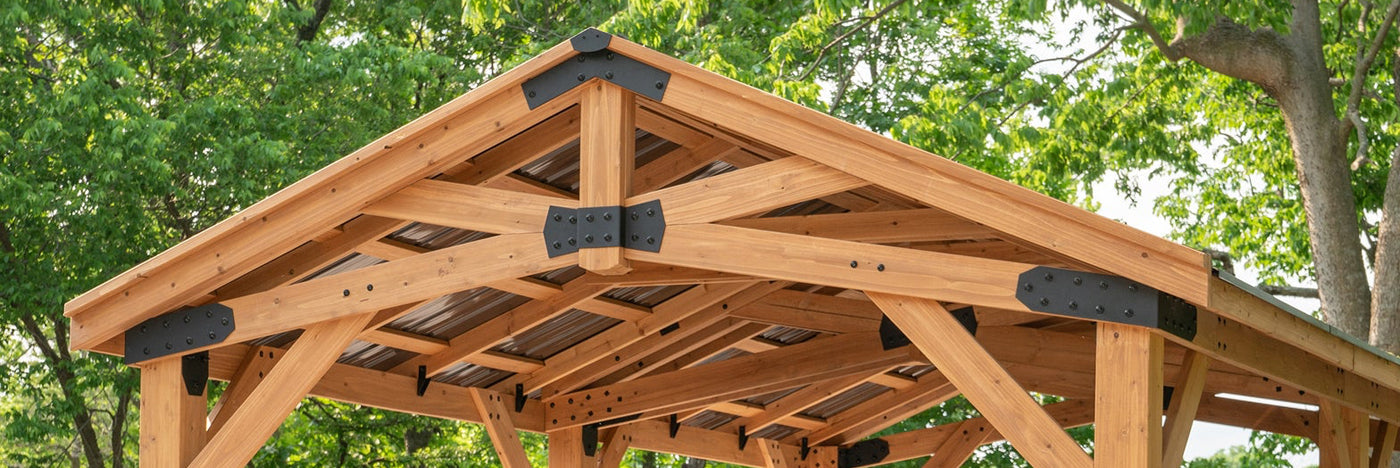
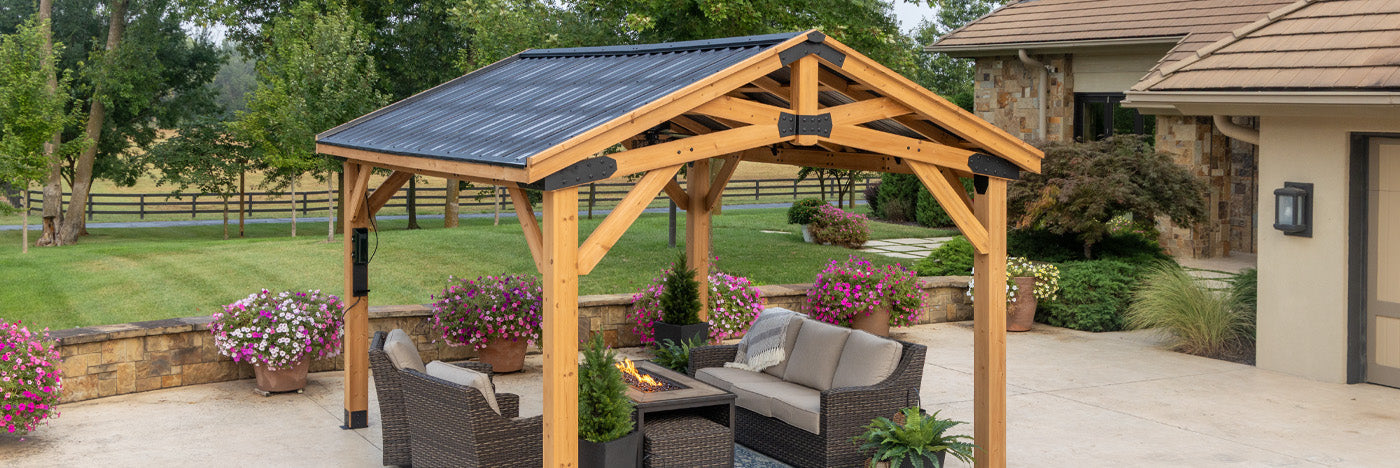
Adding a gazebo to your backyard can completely transform your outdoor space, creating a comfortable spot for hosting parties, relaxing in the shade, or simply enjoying your yard year-round. With so many different options available, knowing what to look for can make the process much easier. In this guide we’ll break down everything from materials and features to assembly tips and style options, so you can find the perfect gazebo to fit your lifestyle.
Pre-Planning Tips
Before you start browsing different styles and narrowing down your favorites, it’s important to cover a few basics. Taking time to consider these essentials will give you a solid starting point and help ensure the gazebo you choose fits your space and needs.
Evaluate Your Space
Start by measuring the area where you want to install your gazebo. Grab a tape measure and write down the length, width, and available height of your space. Remember to factor in a little extra room around the gazebo for comfortable access and avoid blocking doors or walkways. Also, take note of things like trees, fences, flower beds, or pathways that could affect placement or access. You want your gazebo to feel like it fits naturally and that it’s not squeezed in or blocking anything important.
Keep in mind that most gazebos will need to be installed on a solid surface, like a concrete slab or an existing patio, to ensure secure anchoring.
Remember to check your local building codes or HOA rules before moving forward. Some areas have restrictions on the size and placement so it’s important to be aware of any requirements up front.
Set Your Budget
Determining how much you want to spend early on helps focus and guide your search. Think about the upfront cost of the gazebo kit itself, but also things like shipping, installation, or add-ons such as screens, fans, or outdoor furniture. If you’re planning on a DIY gazebo assembly, factor in the tools and supplies you’ll need.
While it might be tempting to go for the lowest price, very inexpensive gazebos may cut corners on materials or construction, which can lead to issues in the long run. On the other hand, a higher price tag doesn’t always guarantee better quality. It’s best to look closely at the materials, features, wind and snow load ratings, warranty, and customer support to ensure you’re getting the best value.
How Will You Use Your Gazebo?
Take a little time to think about how you’d like to use your gazebo. If you want to have a cozy place to relax outside and enjoy some shade, a small gazebo might be perfect. If you’re planning on hosting parties or dining outside with family and friends, you’ll need something larger. When in doubt, it’s usually better to size up a bit to avoid feeling cramped. Just make sure the gazebo doesn’t overwhelm your yard or block your favorite view.
Materials Matter: Which Gazebo Materials Should You Choose?
One of the most important things to consider is what the gazebo is made of. The materials not only determine how your gazebo looks, but also how long it will last and how much maintenance it will require. While high-quality materials may be pricier, selecting the right ones can save you time, effort, and money over time by ensuring your gazebo stands up to the elements and stays looking beautiful.
Framing Materials
Wood

Wooden gazebos are a classic choice. Wood construction can provide lasting durability and a charming aesthetic that will complement most backyards. It offers a warm, natural look and can be customized with stains or paint to match your style. If you opt for a wood gazebo, make sure to select one that uses a high-quality lumber to ensure longevity.
- Cedar: Cedar is often considered the gold standard for outdoor structures because it’s naturally durable and requires less maintenance than many other woods. Thanks to its natural oils, cedar is highly resistant to rot, decay, and insect damage, all without the need for chemical treatments. Unlike some softwoods, cedar doesn’t easily warp when exposed to moisture, which helps it maintain its shape and strength over time. Plus, since it’s a softwood, it’s lighter and generally easier to work with during installation. Even though cedar gazebos are naturally weather-resistant, it’s still a good idea to regularly apply a sealant to help preserve its color and extend its lifespan even further.
- Pine: As a softwood, pine can be easy to work with and a budget-friendly choice for gazebo construction. But unlike cedar, pine does not naturally resist rot, insects, or moisture so it is usually pressure-treated to help withstand the elements. Keep in mind that since pine is a softer wood, it’s more prone to dents and scratches, and it can expand or contract with changes in temperature and humidity. You’ll want to regularly seal pine to help keep your gazebo looking good and lasting longer.
- Spruce: Spruce is also a lightweight softwood that can be easier to handle and cost-effective, but it doesn’t have the natural durability of cedar. Since it lacks the naturally protective oils, spruce must be pressure-treated to withstand outdoor weather. It’s a practical choice if you want an affordable gazebo and are prepared for a bit more regular maintenance to keep it looking its best. Be sure to apply a good sealant to increase its longevity, especially in damp climates.
Metal

Metal gazebos are sleek, sturdy, and require minimal to no upkeep compared to their wood counterparts. They’re a great choice if you live in an area with harsh weather or if you want a more contemporary look. But not all metals offer the same durability or weather resistance, so it’s important to check which type is used when browsing gazebo options.
- Steel: Steel is one of the strongest and most durable choices for gazebos. Its high density and strength make it well-suited for structures designed to withstand heavy wind and snow loads, and it’s generally more robust than aluminum. Since steel gazebos can rust, it’s important to look for powder-coated or galvanized finishes to ensure durability and rust resistance.
- Aluminum: Aluminum is lightweight and naturally rust-resistant, making it easier to work with and a good fit for seasonal gazebos. However, it’s not nearly as strong as steel, so it may be less suitable if you need protection against heavy snow or high winds.
Roof Materials

The material you choose for your gazebo roof is just as important as the framing since it directly impacts the structure’s strength, weather resistance, and long-term durability. A strong, weatherproof roof will help your gazebo stand up to heavy snow, rain, and wind, while also keeping maintenance at a minimum.
Steel
Just like with framing, steel stands out for its exceptional strength and durability making it an excellent choice for gazebo roofs. A steel roof is ideal for year-round use in most climates, offering superior protection against wind, snow, and rain. To ensure the best protection, make sure to look for powder-coated or galvanized steel as these will help prevent rust and allow for minimal upkeep.
Aluminum
Since aluminum is lightweight and naturally resists rust, it’s a practical option for gazebo roofs in mild climates. But since it’s not as strong as steel, it could dent or bend under heavy snow or hail. Aluminum roofs are best for areas where severe weather isn’t a concern.
Asphalt Shingles
Asphalt shingles offer a classic look and provide reliable weather protection. While this roofing material is not as common as steel and aluminum, it can perform well in a variety of climates. Keep in mind asphalt is heavier than metal options, may require a sturdier frame, and occasional maintenance to keep it in good condition.
Essential Features & Specs to Look For
While a patio gazebo may seem like a simple structure, there are several important features and specs to keep in mind when choosing the right one. Look for critical performance ratings to ensure your gazebo will last and stand up to harsh weather. You’ll also want to consider features that fit your specific needs, as well as things like warranty coverage and customer support.
Snow Load and Wind-Resistance Ratings
One of the most important specs to check is the tested ratings for both snow load and wind resistance. These ratings will tell you exactly how much weight your gazebo’s roof can safely support and how much wind it can withstand. A high-quality hardtop gazebo that’s rated to handle heavy snow loads and high wind speeds will provide reassurance during storms or blizzards. Always look for this information when comparing gazebos to ensure your structure will last regardless of the weather conditions.
Support Posts and Hardware

A sturdy gazebo relies on more than just strong materials; it’s also about solid engineering and quality components. For the best long-term performance, choose a gazebo with heavy-duty support posts, reinforced roof framing, and corrosion-resistant hardware.
Electrical Outlets and USB Ports
Having easy access to power in your gazebo can make a big difference in comfort and convenience. Some gazebos come with built-in electrical outlets and USB ports, which is great for easily plugging in string lights, fans, speakers, or keeping your phone charged. This feature lets you set the mood with lighting, play your favorite music, or even run a mini fridge for snacks and drinks.
If the gazebo doesn’t include built-in outlets, you’ll need to plan ahead. You can use outdoor extension cords for a temporary setup, but for a more permanent and safer solution, it’s best to have a licensed electrician install outlets designed for outdoor use.
Warranty and Customer Service
When you invest in a gazebo, it’s important to check what kind of warranty coverage is included. Companies may offer limited or full-coverage warranties that can range from only a few months to several years, covering specific defects or certain types of damage. Review the warranty details or reach out to the manufacturer to make sure you understand the full scope of what’s covered.
It’s also worth considering how easy it will be to get help if you ever need it. Look for companies that offer responsive, live customer service. This will be extremely helpful if you ever need replacement parts or assistance troubleshooting any issues. A strong warranty and helpful customer service can make a big difference in your overall experience and ensure that your gazebo is protected in the long run.
Bug Protection and Privacy
If you really want your gazebo to feel like an outdoor retreat, privacy and bug protection features are key. Many gazebos can be outfitted with bug netting or screens that can enhance comfort and versatility. Mesh screens are designed to keep mosquitoes and other bugs out while still letting in fresh air and plenty of light, so you can easily relax.
Curtains are a great option if you want to add privacy or block the sun. You can close them on one or more sides and tie them back when you want an open feel. For even more seclusion, you could add privacy walls or panels, which can create a cozy space for reading, dining, or just enjoying a little peace and quiet.
Assembly and Installation
Assembling and installing a gazebo properly is critical for safety, stability, and longevity. Whether you’re doing the building yourself or hiring a professional, take time to prepare your site and understand what’s involved in each approach.
Site Prep & Foundation
Choosing the right spot for your gazebo is a crucial part of the installation process. Pick a square, level area that’s clear of utility lines and far enough from any growing trees that could potentially interfere with the structure over time. If your gazebo doesn’t have a built-in floor, it will need to be installed on a solid foundation like a concrete slab. If you’re planning to use an existing patio or deck, it’s important to have an expert inspect the structural integrity to ensure it can support the weight of your gazebo.
If you don’t already have a suitable foundation, you’ll either need to create one or hire a contractor. Don’t forget to check your local building codes or HOA guidelines before you start building since these rules may impact where and how you install your gazebo.
Assembly Options
Think about whether you’d prefer to build the gazebo yourself or have it professionally installed. There are pros and cons to each, so it all comes down to your comfort level, schedule, and how hands-on you’d like to be. DIY assembly is often more budget-friendly and can be rewarding but it does take time and usually requires at least one extra set of hands. Look for gazebos that offer ready-to-assemble designs with pre-cut and pre-drilled pieces, as well as guided assembly apps, like BILT ®, to help simplify the process. Professional installation is more efficient and ensures expert results but will have a higher cost, so be sure to factor that into your budget.
Time & Tools
Assembly time can vary quite a bit depending on the style and size of your gazebo and how much help you have. Smaller gazebos might take just a few hours, while larger, complex models could require a full day or more. Common tools you’ll likely need include a drill, screwdriver, wrench, level, and a hammer. Always review the manufacturer’s instructions for a complete list of required tools and to get a more accurate estimate of assembly time for your specific model.
Gazebo Styles
Now we’re getting to the fun part! With a variety of designs and colors available, it’s all about finding the look that best complements your outdoor living space. If you’re unsure which style will fit best, some brands offer AR tools to help you visualize different options or you could try using AI to generate examples of how different styles may look in your space.
Traditional

Traditional gazebos are all about timeless charm. They typically feature hip or peaked roofs, wood construction, and decorative details like corbels. This style brings a touch of elegance to your backyard, making it a great choice for homes with classic architecture. Along with rectangular and square shapes, round or octagon gazebos are also common traditional designs. This style is usually finished in natural wood tones or crisp white for an iconic look.
Modern

If you love a sleek minimalist look, a modern gazebo is the perfect pick. Modern designs typically use clean lines, sloped roofs, and minimal ornamentation. Both wood and metal work well for this style and can come in rectangular or square shapes. Modern gazebos often come in neutral colors like black or natural wood, and they pair beautifully with contemporary homes and sleek outdoor furniture.
Rustic

Rustic gazebos are all about natural textures and a cozy, relaxed ambiance. They’re usually built from wood with a rougher or reclaimed finish and sometimes feature log-style construction for a cabin-inspired aesthetic. Unlike traditional gazebos, rustic styles skip the ornate details in favor of a more organic look. Earthy colors like browns, deep greens, and weathered grays help these gazebos blend seamlessly into wooded or country settings.
Frequently Asked Questions
Q: How long will it take to assemble a gazebo?
Assembly time depends on the gazebo size, your experience level, and how many people are helping. If the gazebo comes ready-to-assemble with guided instructions, the process is much more straightforward, but it can still range from several hours to a couple of days. Staying organized, using the right tools, and having extra help can make the process much smoother.
Q: What's the difference between a gazebo and a pergola?
A gazebo is a fully covered outdoor structure with a solid roof, making it ideal for protection from sun and rain. A pergola usually has an open roof made of cross beams or slats, providing partial shade but less shelter from rain. Gazebos offer more coverage and privacy, while pergolas are great for creating a light, airy outdoor space.
Q: How long do gazebos typically last?
The lifespan of a gazebo depends on the materials used and how well it’s maintained. Metal gazebos made from powder-coated galvanized steel can last for decades with minimal maintenance, while high-quality wooden gazebos can also endure for many years or more with proper care. Regular cleaning, weatherproofing, and prompt repairs help extend the life of any gazebo.
Q: What size gazebo do I need?
Picking a gazebo size depends on how you plan to use it and the space you have available. Always check the technical drawing to confirm the exact dimensions, as the overall size may be larger than the footprint. Make sure to measure your area and leave extra room around the gazebo for easy access and to account for existing features in your yard. To help visualize the fit, we recommend using the “see in your space” feature on our product pages or referring to the dimension diagrams and placing cones or flags to see where the gazebo would go.
Q: What’s the difference between hip roofs, peak roofs, and slope roofs?
A hip roof features four sides that gently slope downward from a central ridge or point. This design is known for its durability and is a great choice for areas with strong winds or heavy snow. This roof design offers a classic, balanced look that complements any outdoor space.
Peak roofs have two sloped sides that meet in the middle to create a peak. Their traditional, triangular shape helps rain and snow run off easily, and they add timeless style to your backyard.
Slope roofs have a single angled surface that slopes in one direction. This design is great for letting water and snow slide off quickly to prevent damage, and it’s often used to create a modern aesthetic with its clean, minimalist lines.
Gazebo Prep Checklist
Use this condensed list to make sure you’ve covered all the essentials as your begin shopping for a gazebo.
- Set your budget
- Make sure the install site is level and structurally sound
- Measure your space and account for accessibility
- Review local codes or HOA rules
- Choose high-quality materials suited for your needs
- Confirm wind and snow load ratings
- Consider features, warranty, and customer support
- Understand assembly requirements
- Pick your favorite style
A gazebo can truly transform your outdoor living experience. Not only does it create a striking centerpiece in your yard, but it also offers a versatile space for relaxing, entertaining, and spending time with family and friends. Whether you’re enjoying a quiet morning coffee or hosting a party, a gazebo lets you enjoy the outdoors in comfort and style.
As you make your decision, remember to keep these key factors in mind to help you get the most out of your investment and ensure your gazebo fits seamlessly into your space. Taking the time to plan carefully ensures you’ll choose the best one for your space and enjoy it for years to come.

Leave a comment
This site is protected by hCaptcha and the hCaptcha Privacy Policy and Terms of Service apply.